
Blog
How to Store Dry Fruits and Nuts for Long-Lasting Freshness

Key Takeaways
- Airtight glass or metal containers protect dry fruits and nuts from air, moisture, and pests far better than the original plastic packaging.
- A cool, dark, dry spot works for short-term use, but refrigeration or freezing is the best way to extend freshness for months.
- Nuts and dried fruits should be stored separately, since nuts are oil-rich and dried fruits carry more residual moisture.
- Humidity, heat, and sunlight are the biggest enemies of freshness, especially during Indian summers and the monsoon.
- Labeling containers with purchase dates and following a “first in, first out” habit prevents wastage and keeps every batch tasting fresh.
Dry fruits and nuts are a pantry staple in most Indian households, prized for their taste, crunch, and nutrition. But even the best quality almonds and cashews, or raisins, can turn stale, chewy, or rancid within weeks if they aren’t stored correctly.
The good news is that proper storage isn’t complicated. A few simple habits around containers, temperature, and handling can keep your dry fruits and nuts tasting fresh for months rather than days. This guide walks through everything you need to know, from choosing the right container to seasonal storage tips for Indian weather.
Why Proper Storage Matters
Nuts contain natural oils that react with oxygen over time, a process called oxidation. This is what causes nuts to develop a bitter, “off” taste, commonly known as rancidity. Dried fruits, on the other hand, contain natural sugars and residual moisture, which makes them prone to becoming sticky, hardened, or even moldy if exposed to humidity.
Both categories are also sensitive to heat, light, and pests. Poor storage doesn’t just affect taste and texture — it also reduces the nutritional value you’re paying for. Getting storage right protects both your health and your money.
Common Mistakes That Ruin Freshness
Most freshness problems start with small, everyday habits rather than one big mistake.
- Leaving the original packaging open: Store bags and pouches are rarely airtight once opened.
- Storing near the stove or a sunny window: Heat and light speed up oxidation significantly.
- Mixing different nuts and dried fruits in one container: This causes flavors and aromas to transfer between items.
- Skipping labels: Without a purchase date, it’s easy to forget how long something has been sitting in the pantry.
- Handling with wet or unclean hands: This introduces moisture that encourages mold growth.
Best Containers for Storing Dry Fruits and Nuts
Glass Containers
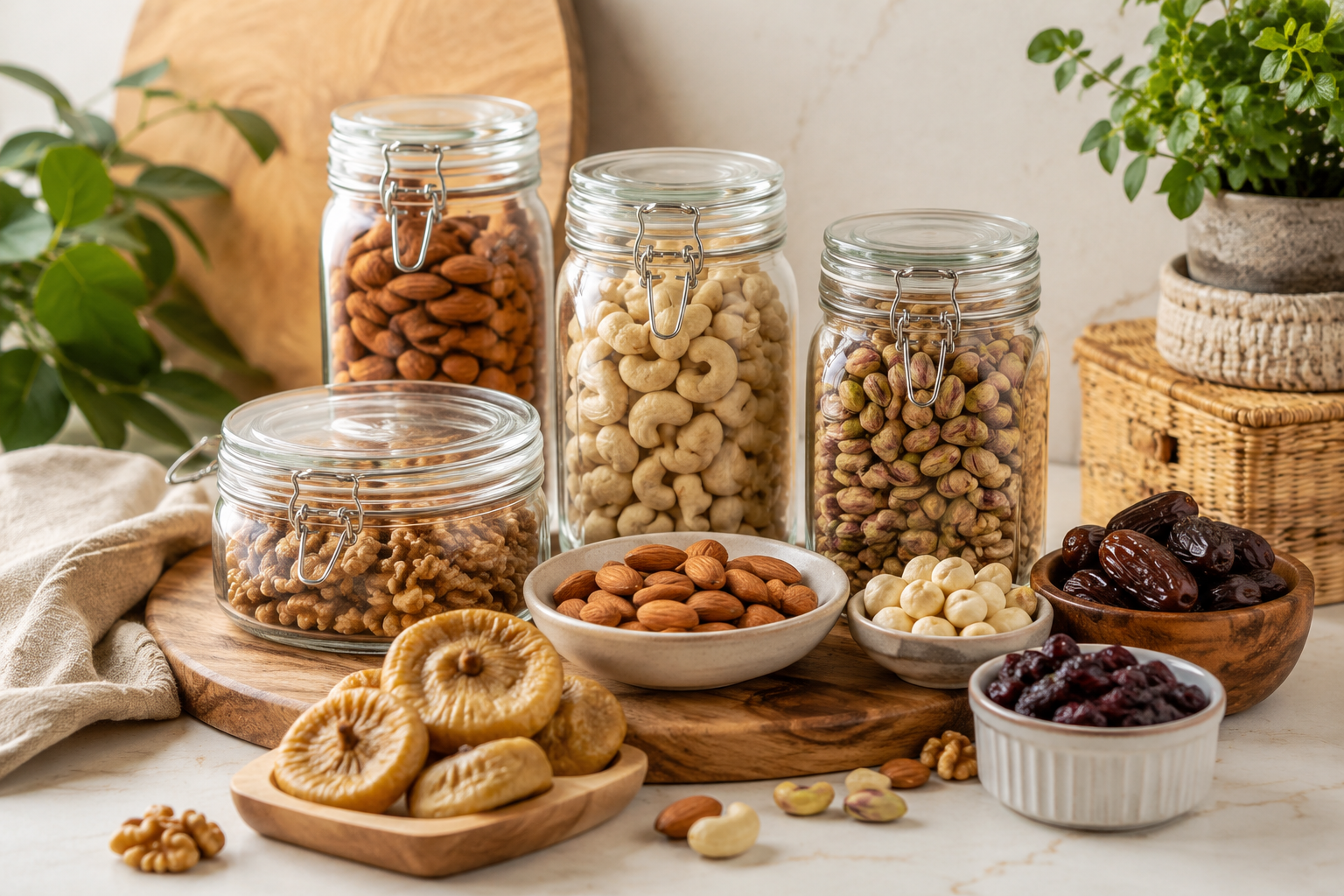
Glass jars with tight-fitting lids are widely considered the best choice. Glass is non-porous, doesn’t absorb odors, and won’t react with the natural oils in nuts. It also lets you see contents at a glance, which makes rotation easier.
Metal Tins
Airtight metal tins are a good alternative, particularly for gifting or bulk storage, as they block out light completely and are durable for long-term pantry use.
Plastic Containers
Food-grade plastic containers with secure, locking lids can work for short-term storage. However, plastic is more porous than glass and can absorb odors from strong-smelling foods over time, so it’s best reserved for items you’ll finish quickly.
What to Avoid
Paper bags, loosely tied pouches, and cloth bags should be avoided for anything beyond a day or two. They let in air and humidity, both of which shorten shelf life considerably.
Ideal Storage Conditions
Regardless of the container, three conditions matter most for keeping dry fruits and nuts fresh.
Keep Them Cool
Heat accelerates oxidation. A pantry shelf away from the stove, oven, or any heat-emitting appliance is ideal for short-term storage.
Keep Them Dark
Direct sunlight and even prolonged exposure to bright kitchen lighting can degrade quality. Opaque containers or a closed cupboard help block light exposure.
Keep Them Dry
Moisture is the fastest route to spoilage, especially for dried fruits like apricots, figs, and raisins. Adding a food-safe silica gel packet or a small oxygen absorber to your container can help absorb excess moisture, particularly during humid months.
How to Store Nuts vs. Dried Fruits
While the general principles overlap, nuts and dried fruits have slightly different storage needs, and mixing them in the same container isn’t ideal.
Storing Nuts
Nuts such as almonds, walnuts, cashews, and pistachios are naturally high in oil, which makes them more susceptible to rancidity. Whole, raw nuts stay fresher longer than chopped or roasted ones, since a larger surface area speeds up oxidation. Refrigeration is strongly recommended once the weather turns warm.
Storing Dried Fruits
Dried fruits like raisins, dates, figs, apricots, and prunes retain some natural moisture even after drying. If left in a warm spot, this moisture can encourage mold or cause the fruit to ferment slightly. An airtight container in a cool, dry space — or the refrigerator during summer — keeps them soft without spoiling.
Room Temperature vs. Refrigerator vs. Freezer
Choosing where to store your dry fruits and nuts depends on how quickly you’ll use them and the climate you live in.
| Storage Method | Best For | Typical Freshness Window | Notes |
| Pantry (Room Temperature) | Items you’ll finish within 2–4 weeks | 1–3 months | Use airtight, opaque containers away from heat |
| Refrigerator | Bulk purchases, warm or humid climates | 6–9 months | Store in sealed containers to prevent odor absorption |
| Freezer | Long-term storage, festive stock-ups | Up to 12 months | Let items return to room temperature before opening to avoid condensation |
Freezing doesn’t damage the texture of most nuts and dried fruits, since their moisture content is already low. Just make sure everything is sealed tightly before it goes in, and avoid repeated freeze-thaw cycles where possible. The same principles apply to berries and seeds, which are just as sensitive to warmth and moisture.
Seasonal Storage Tips for Indian Weather
Summer and Monsoon
High heat and humidity make summer and monsoon months the riskiest time for dry fruit storage in India. Refrigerate wherever possible, keep containers tightly sealed, and avoid leaving jars out on the kitchen counter. Checking your stock every couple of weeks for any softness or off smell is a good habit during these months, especially if you rely on dry fruits to support your immunity through seasonal changes.
Winter
Cooler weather is more forgiving, but humidity can still creep in, especially in coastal regions. Continue using airtight containers and keep them away from radiators or heaters, which can dry out or warm the pantry shelf unexpectedly.
Shelf Life of Popular Dry Fruits and Nuts
Shelf life varies by type, and by whether you store items at room temperature, in the fridge, or in the freezer.
| Item | Room Temperature | Refrigerated | Frozen |
| Almonds | 3–4 months | 9 months | Up to 1 year |
| Cashews | 3–4 months | 6–9 months | Up to 1 year |
| Walnuts | 2–3 months | 6 months | Up to 1 year |
| Pistachios | 3–6 months | Up to 1 year | Up to 1 year |
| Raisins | 6–12 months | 12 months | Up to 1 year |
| Dates | 1–2 months | Up to 6 months | Up to 1 year |
| Dried Figs | 6–12 months | 12 months | Up to 1 year |
| Dried Apricots | 6–8 months | 10–12 months | Up to 1 year |
These are general guidelines — freshness at the time of purchase and how well the container seals will always make some difference.
Simple Habits That Extend Freshness
A few small routines go a long way toward keeping your entire pantry organized and fresh.
- Label everything: Note the purchase or opening date on each container.
- Follow first in, first out: Use older stock before newer batches.
- Buy only what you’ll use in a season: Shop in smaller, fresher batches rather than stocking up more than you need, especially during festive bulk-buying.
- Keep a simple tracking habit: Some households now use lightweight pantry-tracking tools, such as Time Miner, to log purchase dates and get reminders before items pass their best freshness window — a small step that makes rotation effortless.
- Store different varieties separately: This prevents flavor transfer and makes it easier to spot spoilage early.
How Good Packaging Helps From the Start
Storage habits matter, but they work best when you start with fresh, well-packed products. Every batch at Kalratri Dry Fruits is sealed with freshness-lock packaging designed to protect quality right up to the point you open it at home. Once opened, simply transfer the contents into an airtight container using the tips above.
Conclusion
Storing dry fruits and nuts correctly is a small effort that makes a real difference to taste, texture, and nutrition. Airtight containers, a cool and dark spot, and mindful use of your fridge or freezer will keep your favorite almonds, cashews, raisins, and dates fresh for months.
When it’s time to restock, explore our full range of premium dry fruits and nuts, freshly packed and ready to store the right way from day one.
Frequently Asked Questions
Q.1 Do dry fruits and nuts need to be refrigerated?
A: Not always. If you’ll finish them within a few weeks, a cool pantry works fine. For longer storage or warmer climates, refrigeration is a better option.
Q.2 Can I store different nuts together in one jar?
A: It’s better to keep them separate, since different nuts and dried fruits can transfer aroma and moisture to one another, affecting overall freshness.
Q.3 How do I know if dry fruits have gone bad?
A: Look for a sour or bitter smell, visible mold, an oily film, or a texture that feels unusually soft, sticky, or hard. When in doubt, it’s best to discard the item.
Q.4 Is it safe to freeze dry fruits and nuts?
A: Yes. Freezing is one of the safest and most effective ways to extend shelf life without affecting taste or texture, as long as items are sealed in airtight containers before freezing.