

Blog
How Many Almonds Should You Eat Daily? Ideal Dosage and Benefits

Key Takeaways
- Most nutrition experts recommend 20 to 25 almonds (about one ounce or 28 grams) as the ideal daily serving for adults.
- This portion offers healthy fats, protein, fiber, and vitamin E without tipping over your daily calorie needs.
- The right amount varies by age and goal — children, pregnant women, athletes, and older adults each have slightly different needs.
- Daily almonds support heart health, blood sugar control, skin health, brain function, and digestion.
- Overeating almonds can lead to unwanted weight gain and digestive discomfort, so portion control matters as much as consistency.
Almonds (Badam)are one of the most talked-about nuts in everyday nutrition, and for good reason. They’re rich, satisfying, and easy to add to almost any diet.
But a common question keeps coming up: how many almonds should you actually eat in a day? Eat too few, and you miss out on the nutritional benefits. Eat too many, and those healthy calories can add up quickly. This guide breaks down the ideal daily amount, who might need more or less, and the science-backed benefits of making almonds part of your routine.
How Many Almonds Should You Eat in a Day?
The right number of almonds depends on your age, activity level, and health goals, but most people can follow a simple baseline. Here’s how to work out the portion that fits your daily routine.
The Standard Recommended Serving
For most healthy adults, nutrition guidelines point to roughly 20 to 25 almonds a day, which works out to about one ounce or 28 grams. This is considered a single standard serving and delivers a solid balance of protein, fiber, and heart-healthy fats.
At this amount, you get meaningful nutrition without overshooting your daily calorie budget. Whether you prefer raw, roasted, or lightly salted almonds, sticking close to this serving size is a safe, sustainable habit.
Almond Intake for Different Life Stages
The ideal number isn’t identical for everyone. Children generally do well with a smaller portion of about 5 to 10 almonds a day, soaked and peeled to make digestion easier.
Pregnant women are often advised to have around 10 to 15 soaked almonds daily, since almonds provide folate, iron, and calcium that support this stage — though it’s always worth checking with a doctor first. Athletes and highly active individuals can go slightly higher, up to 30 or even 40 almonds, to support their increased protein and energy needs.
Older adults tend to do well with a moderate 10 to 15 almonds a day, which supports bone strength, heart health, and cognitive function without adding excess calories to a typically lower-activity lifestyle.
What You Get Nutritionally From One Serving
A standard one-ounce serving of almonds, roughly 23 nuts, contains about 160 to 170 calories, 6 grams of protein, and around 14 grams of healthy fats — mostly monounsaturated fat, the same kind found in olive oil.
That same serving also delivers close to 3.5 grams of fiber, a strong dose of vitamin E, and useful amounts of magnesium and calcium. It’s this combination of protein, fiber, and healthy fat that makes almonds so satisfying in such a small portion.
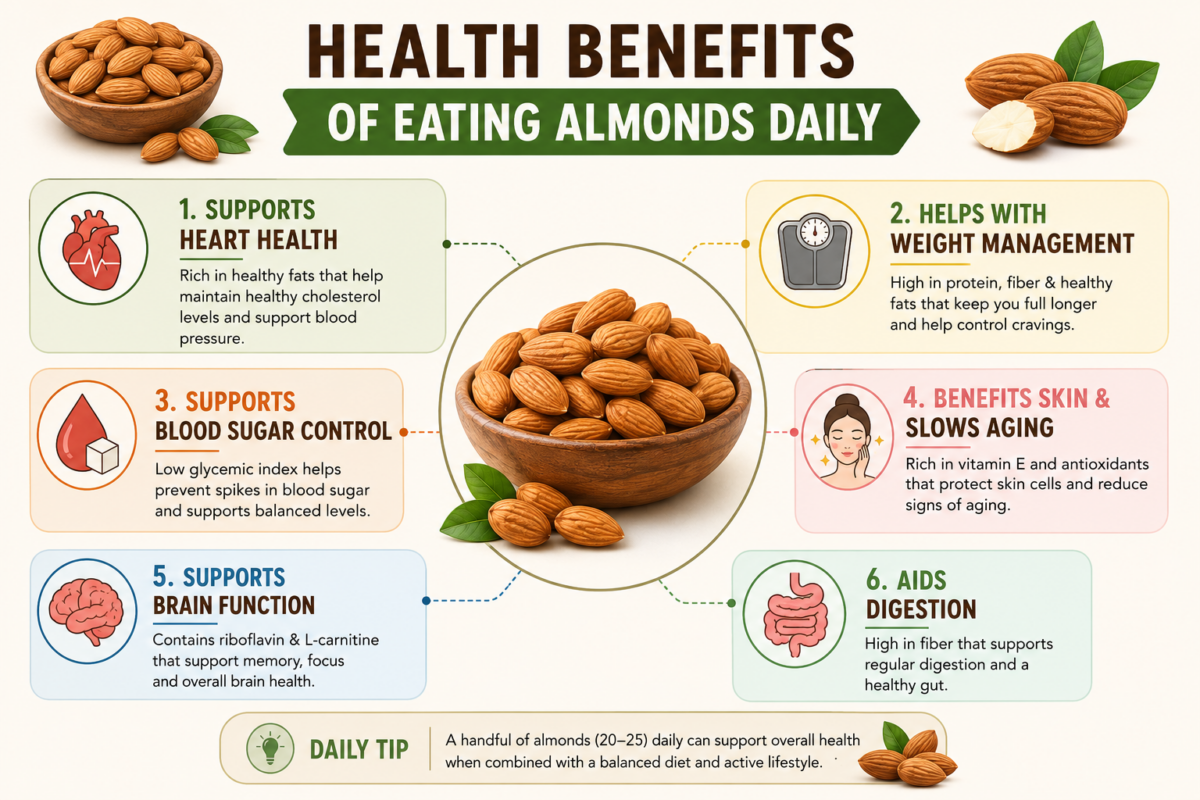
Health Benefits of Eating Almonds Daily
Beyond their taste and crunch, almonds bring a wide range of health benefits when eaten consistently. Here’s what a daily serving can do for your heart, skin, digestion, and more.
Supports Heart Health
Almonds are rich in monounsaturated fats, the type of fat associated with healthier cholesterol levels. Regular almond consumption has also been linked to modest reductions in blood pressure, which supports overall cardiovascular health over time.
This heart-friendly profile ties closely into the broader health benefits of dry fruits that come from eating them as part of a daily routine.
Helps With Weight Management
Despite being calorie-dense, almonds are highly satiating. Their mix of protein, fiber, and fat helps curb hunger, which often means eating less throughout the rest of the day.
Some research suggests the body doesn’t absorb every calorie in whole almonds as efficiently as once assumed, particularly when they’re unroasted. Portion control still matters, but almonds can fit comfortably into a weight-conscious diet.
Supports Blood Sugar Control
Almonds have a very low glycemic index, meaning they don’t cause sharp spikes in blood sugar. Their fiber and healthy fat content slows down how quickly glucose enters the bloodstream after a meal.
This makes almonds a practical snack option for people managing blood sugar levels, especially when eaten alongside meals rather than on an empty stomach.
Benefits Skin and Slows Visible Aging
Almonds are one of the richest natural sources of vitamin E, a powerful antioxidant that helps protect skin cells from everyday damage. Some studies have even linked consistent almond intake to a visible reduction in fine lines and skin pigmentation over time.
This antioxidant pair pairs well with other dry fruits to boost immunity, especially during seasonal changes.
Supports Brain Function
Almonds contain riboflavin and L-carnitine, two nutrients associated with cognitive function and brain health. In traditional wellness practices, almonds have long been recommended to support memory and mental alertness.
While almonds alone aren’t a substitute for a balanced diet, they’re a simple, nutrient-dense addition that supports overall brain nutrition.
Aids Digestion
The fiber in almonds supports regular digestion and helps maintain a healthy gut environment. A small daily serving can make a noticeable difference for people who don’t get enough fiber from their regular meals.
Eating almonds with the skin intact adds slightly more fiber and polyphenols compared to blanched almonds, making whole almonds the better choice for digestive benefits.
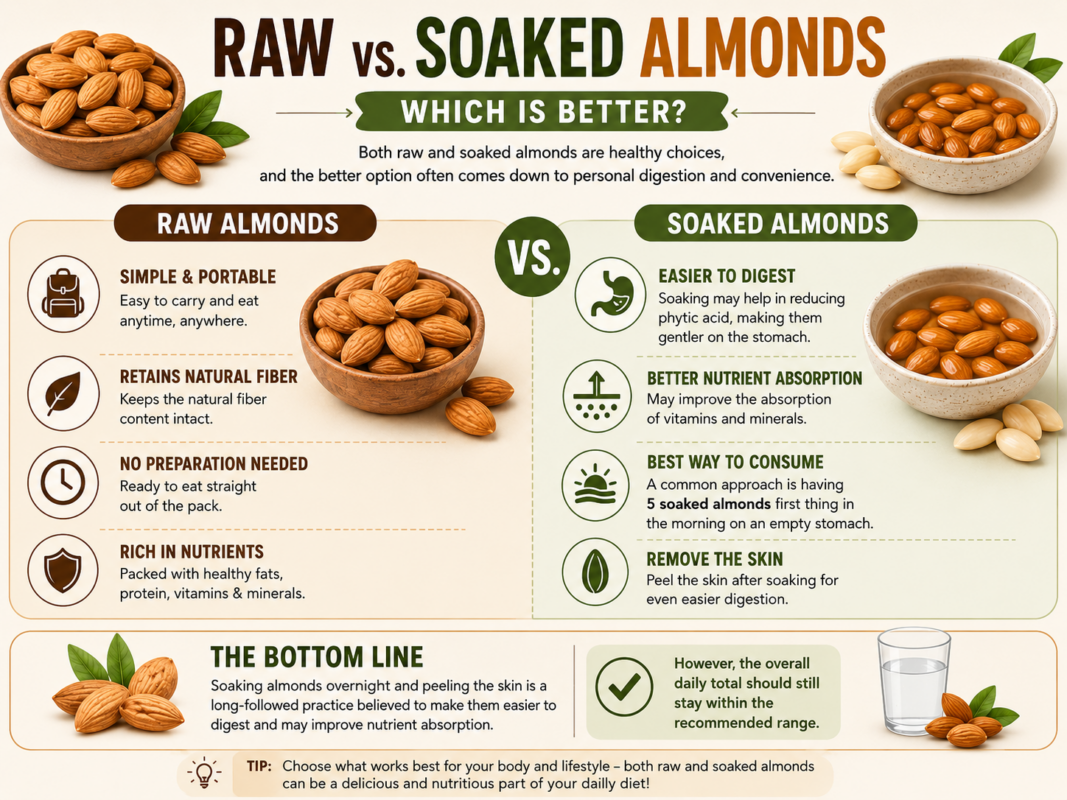
Raw vs. Soaked Almonds: Which Is Better?
Both raw and soaked almonds are healthy choices, and the better option often comes down to personal digestion and convenience. Raw almonds are simple, portable, and retain their natural fiber content without any preparation needed.
Soaking almonds overnight and peeling the skin is a long-followed practice believed to make them easier to digest and may improve nutrient absorption. A common approach is having 5 soaked almonds first thing in the morning on an empty stomach, though the overall daily total should still stay within the recommended range.
When Is the Best Time to Eat Almonds?
There’s no single “correct” time, but almonds work well as a mid-morning or evening snack to curb hunger between meals. Eating them alongside a meal can also help slow down sugar absorption from other foods.
It’s best to avoid eating a large quantity late at night, simply because of their calorie density. A moderate portion earlier in the day tends to fit more comfortably into most routines.
What Happens If You Eat Too Many Almonds?
Almonds are healthy, but more isn’t automatically better. Overeating almonds regularly can lead to unwanted weight gain, since even healthy fats add up quickly in larger quantities.
Excess intake can also cause digestive discomfort due to the high fiber content, and almonds contain oxalates, which may be a concern for people prone to kidney stones. As with most nutrient-dense foods, moderation is what makes almonds beneficial rather than excessive.
Anyone with a tree nut allergy should avoid almonds altogether and consult a doctor before introducing them into their diet.
Making Almonds a Consistent Daily Habit
Consistency matters more than occasional large servings. A small daily portion, kept in a properly sealed container, is far more effective than eating a large batch once a week.
Since almonds are naturally oil-rich, they can turn rancid if left exposed to heat or air for too long. Knowing how to store dry fruits and nuts the right way helps preserve both taste and nutrition.
Many people also find it helpful to build a simple routine around their daily almond habit. Lightweight tools such as Time Miner, which help track daily food habits and reminders, can make it easier to stay consistent without overthinking portion sizes each day.
If you prefer a ready-to-eat option, lightly roasted and salted almonds, like our Roasted Salted Almonds, make portioning simple while still keeping the snack wholesome.
Conclusion
Almonds are a small but powerful addition to a daily diet, offering benefits for heart health, skin, digestion, and overall nutrition. Sticking to a moderate serving of 20 to 25 almonds a day, adjusted for your age and lifestyle, is the simplest way to enjoy these benefits consistently.
If you’re ready to build a healthier daily habit, explore our range of premium almonds and nuts, freshly packed to help you get the most out of every serving.
Frequently Asked Questions
Q.1 How many almonds should I eat daily for weight loss?
A: Around 20 to 23 almonds a day is generally recommended for weight management, as this amount supports satiety without adding excessive calories.
Q.2 Is it better to eat almonds raw or soaked?
A: Both are healthy. Raw almonds are convenient and retain natural fiber, while soaked almonds may be easier to digest for some people.
Q.3 Can eating too many almonds be harmful?
A: Yes, in excess. Overeating can lead to weight gain, digestive discomfort, and may be a concern for people prone to kidney stones due to their oxalate content.
Q.4 Is it safe to eat almonds every day?
A: Yes, for most people, a moderate daily serving of almonds is a safe and beneficial part of a balanced diet.